AI-Enhanced Logistics Decision System
Dock Operations Dashboard for Predictive & Real-Time Coordination
Client: Multi-site warehousing & logistics operations
Overview
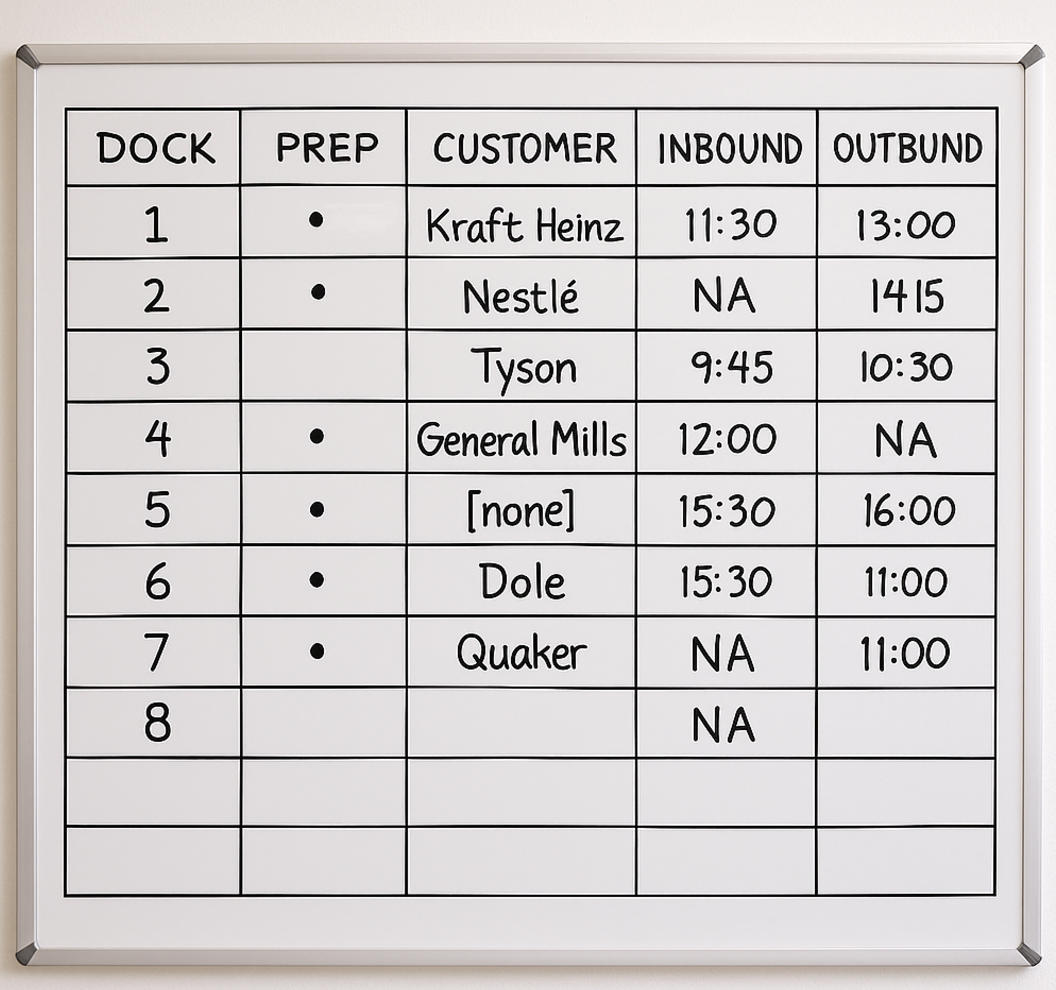
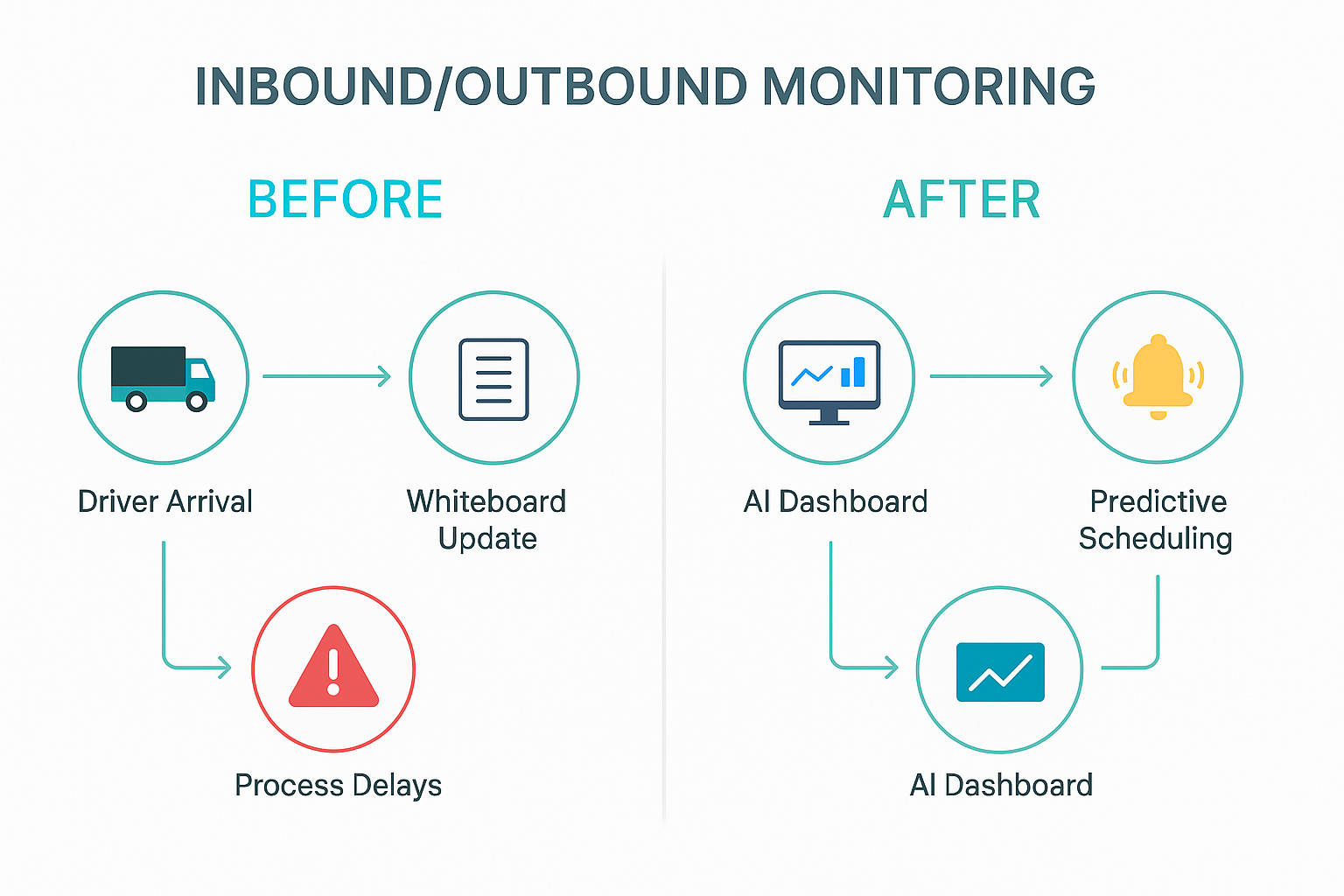
Designed and deployed an AI-enhanced decision system for managing inbound and outbound logistics operations, replacing manual whiteboard tracking with a real-time, predictive dashboard.
The system integrated live operational data with AI-driven insights, enabling supervisors and coordinators to anticipate delays, optimize dock utilization, and make faster, more informed decisions across multi-site facilities.
This work operationalized AI-driven decision-making in logistics by combining real-time system visibility with predictive intelligence, while maintaining reliability, trust, and governance alignment.
Problem
Dock operations relied on manual tracking processes, resulting in:
Limited real-time visibility into inbound and outbound activity
Inefficient dock utilization and scheduling conflicts
High susceptibility to human error
Reactive rather than proactive decision-making
Difficulty scaling processes across multiple facilities
Existing data systems lacked the structure and accessibility needed to support timely, role-specific decisions.
Approach
AI-Driven Decision Intelligence
Built a decision-support system that integrates real-time operational data with predictive AI insights to enable proactive, high-confidence decision-making.
Integrated AI-based ETA predictions and anomaly detection
Prioritized real-time accuracy before introducing predictive scheduling
Enabled early identification of delays and bottlenecks
Role-Based Operational Design
Structured the system to align with how different roles interact with logistics data.
Designed role-specific views for supervisors, yard managers, and coordinators
Reduced cognitive load by surfacing only relevant, actionable information
Improved clarity and speed of decision-making across teams
Scalable System Architecture
Balanced consistency with flexibility across multi-site operations.
Developed a modular framework supporting site-specific workflows
Maintained standardized data structures and governance alignment
Leveraged existing infrastructure to accelerate deployment and reduce risk
Adoption & Workflow Integration
Ensured successful implementation through user-centered design and change management.
Conducted multi-site user interviews and usability testing
Iterated dashboard design based on real-world operational needs
Supported adoption through training and workflow alignment
Key Tradeoffs
Predictive Intelligence vs. Real-Time Reliability
Role-Based Views vs. Unified Visibility
Scalability vs. Site Customization
System Innovation vs. Adoption Speed
Decisions prioritized system reliability, user trust, and operational clarity over aggressive predictive automation.
Outcome
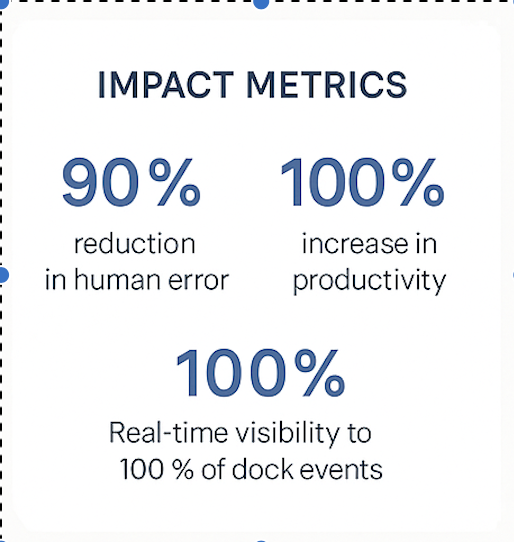
Reduced human error by 90% through elimination of manual tracking
Increased operational productivity by 100% across tested facilities
Improved real-time and predictive decision-making capabilities
Enabled scalable, AI-supported coordination across multiple sites
Increased adoption through intuitive, role-aligned system design
Key Capabilities Demonstrated
AI-Driven Decision System Design
Predictive Analytics Integration
Human-Centered Operational Design
Multi-Site System Scaling
AI Governance & Data Alignment